 07-25-2026, 11:58 AM
|
#1
|
|
Toppy
Join Date: Apr 2014
Location: Dorchester, ON, Canada
Posts: 146
|
2002 Mass Air Flow Connector
Has any one replaced a mass air flow connector on a 2002, I have an issue of no idle with sensor connected. I have tried another sensor, same issue
Is the sensor connector available from Porsche as a quick splice in terminal, or does one buy it in pieces.
Also the stalling at idle issue started after performing an engine smoke test looking for a vacuum leak.
The sensor was removed from the engine during the test.
__________________
1999 Boxster
Arena Red/Graphite Grey Interior/Black 03 Top/550 All Red Tail Lights
Last edited by Toppy986; 07-25-2026 at 05:32 PM.
|

|

|
|
07-26-2026, 06:03 AM
|
#2
|
|
Registered User
Join Date: Sep 2018
Location: Laval QC
Posts: 910
|
When I replaced the engine in my 2000 S several connectors had been broken or were missing. My experience with Porsche was that they sell only the complete wiring harness. All of the connectors are from third party manufacturers and you can find them with a bit of searching. I just looked at the harness I have for sale and what I think is the MAF sensor connector has BSK on it, which could be the company name and there are all sorts of numbers. Do an internet search using all these numbers and you will probably find the part you need. You will have to solder into it into the harness. Be sure that the connector is your problem.
__________________
Grant
Arctic Silver 2000 Boxster S - bought with a broken engine, back on the road with the engine replaced
Green 2000 Boxster 5-speed and 1978 928 auto
1987 924S 5-speed (Sold) - Blue 2000 Boxster 5 spd (Sold)
|
|
|
|
|
07-26-2026, 06:05 AM
|
#3
|
|
Registered User
Join Date: Feb 2005
Location: It's a kind of magic.....
Posts: 6,700
|
If you need to replace the sensor connector, DO NOT USE CRIMP SPLICES, solder and heat shrink tube the wires. Over the years, we have had to redo more of these than I care to count to fix the problems crimps create...................
__________________
“Anything really new is invented only in one’s youth. Later, one becomes more experienced, more famous – and more stupid.” - Albert Einstein
|
|
|
|
|
07-27-2026, 09:38 AM
|
#4
|
|
Registered User
Join Date: Jan 2023
Location: Ontario, Canada
Posts: 306
|
Quote:
Originally Posted by JFP in PA

If you need to replace the sensor connector, DO NOT USE CRIMP SPLICES, solder and heat shrink tube the wires. Over the years, we have had to redo more of these than I care to count to fix the problems crimps create...................
|
Interesting. Most people swear that crimp connections are the only thing that should be used in automotive applications. I am about to build some O2 sensor extension wires, the connectors that come with the plugs are crimp style.
And not trying to hijack the thread, I think the MAF connector is the same or similar to the O2 connector.
__________________
2000 Guards Red Boxster
2014 Meteor Gray Cayenne
|
|
|
|
|
07-27-2026, 11:25 AM
|
#5
|
|
Registered User
Join Date: Feb 2005
Location: It's a kind of magic.....
Posts: 6,700
|
Quote:
Originally Posted by redpepperracing
Interesting. Most people swear that crimp connections are the only thing that should be used in automotive applications. I am about to build some O2 sensor extension wires, the connectors that come with the plugs are crimp style.
And not trying to hijack the thread, I think the MAF connector is the same or similar to the O2 connector.
|
Crimp style connectors are the bane of low voltage sensor systems, over the years we have many cars in with complaints of erratic or low idle speed issues, stalling, and repeated MAF related codes, all of which went away when we took out the crimps, soldered, and heat shrink tubed the wires; same sensor, no further issues. We have seen the same type of issues on O2 sensors with crimps, but we have never had a comeback on soldered connections. 
__________________
“Anything really new is invented only in one’s youth. Later, one becomes more experienced, more famous – and more stupid.” - Albert Einstein
|
|
|
|
|
07-27-2026, 01:16 PM
|
#6
|
|
Toppy
Join Date: Apr 2014
Location: Dorchester, ON, Canada
Posts: 146
|
Thanks JFP I agree that the best wire connection is a solder one.
My reason for changing the connector is, when I first removed the connector from the sensor it was very tight and I may have pulled on a wire and broke one.
Would the car not idle with a broken wire when plugged into the sensor, stalling only occurred when sensor and in the air flow of the intake, engine idles when plugged in but sensor removed.
Thoughts?
__________________
1999 Boxster
Arena Red/Graphite Grey Interior/Black 03 Top/550 All Red Tail Lights
|
|
|
|
|
07-27-2026, 01:58 PM
|
#7
|
|
Registered User
Join Date: Feb 2005
Location: It's a kind of magic.....
Posts: 6,700
|
You should be able to test both the sensor and the wiring connections, by back probing the sensor harness at the DME connection point; if a wire is broken or disconnected, it would show up as an unusual or missing reading.
__________________
“Anything really new is invented only in one’s youth. Later, one becomes more experienced, more famous – and more stupid.” - Albert Einstein
|
|
|
|
|
07-27-2026, 11:37 PM
|
#8
|
|
Registered User
Join Date: Jul 2024
Location: Western Europe
Posts: 332
|
Quote:
Originally Posted by JFP in PA
Crimp style connectors are the bane of low voltage sensor systems, over the years we have many cars in with complaints of erratic or low idle speed issues, stalling, and repeated MAF related codes, all of which went away when we took out the crimps, soldered, and heat shrink tubed the wires; same sensor, no further issues. We have seen the same type of issues on O2 sensors with crimps, but we have never had a comeback on soldered connections. |
This is all the more interesting given that oxygen sensors rely on reference air, which they receive via the supply wires. Therefore, the supply wires must not be soldered. At least, that is my understanding. I used to be a huge fan of soldering, but with the right tools, you can achieve excellent results with crimping. When measuring the resistance afterwards you can rule out a bad connection.
But I don’t want to hijack the thread either ;-)
|

|
|
|
07-27-2026, 11:52 PM
|
#9
|
|
Registered User
Join Date: Jul 2024
Location: Western Europe
Posts: 332
|
Quote:
Originally Posted by Toppy986
Thanks JFP I agree that the best wire connection is a solder one.
My reason for changing the connector is, when I first removed the connector from the sensor it was very tight and I may have pulled on a wire and broke one.
Would the car not idle with a broken wire when plugged into the sensor, stalling only occurred when sensor and in the air flow of the intake, engine idles when plugged in but sensor removed.
Thoughts?
|
For example, I need to replace the throttle body connector; I’ve snapped off a retaining tab. The wires from the old connector are unpinned using the appropriate tool. The connectors have small barbs that prevent them from being pulled out. These barbs are pressed in so that the connector can be removed.
I’d recommend doing the same with your MAF connector; that way, you can check the cables and their connectors in detail.
|
|
|
|
|
07-28-2026, 05:42 AM
|
#10
|
|
Registered User
Join Date: Jan 2023
Location: Ontario, Canada
Posts: 306
|
Quote:
Originally Posted by JFP in PA
Crimp style connectors are the bane of low voltage sensor systems, over the years we have many cars in with complaints of erratic or low idle speed issues, stalling, and repeated MAF related codes, all of which went away when we took out the crimps, soldered, and heat shrink tubed the wires; same sensor, no further issues. We have seen the same type of issues on O2 sensors with crimps, but we have never had a comeback on soldered connections. |
Good to know, thanks!
__________________
2000 Guards Red Boxster
2014 Meteor Gray Cayenne
|
|
|
|
|
07-28-2026, 05:46 AM
|
#11
|
|
Registered User
Join Date: Feb 2005
Location: It's a kind of magic.....
Posts: 6,700
|
Quote:
Originally Posted by 997_986
This is all the more interesting given that oxygen sensors rely on reference air, which they receive via the supply wires. Therefore, the supply wires must not be soldered. At least, that is my understanding. I used to be a huge fan of soldering, but with the right tools, you can achieve excellent results with crimping. When measuring the resistance afterwards you can rule out a bad connection.
But I don’t want to hijack the thread either ;-)
|
Sorry, but that is not correct. O2 sensors function by measuring very slight changes in resistance due to the level of oxygen in the exhaust gases which alters the voltage signal (which is typically less than 1 volt), which the DME sees as a signal to adjust the fueling level. Crimp connectors can easily alter the base resistance in the wiring harness and the corresponding voltage, and if not heat shrink sealed can allow moisture into the connection, again altering the base system resistance, or even shorting the wire, altering the signal the DME sees. Soldering and heat shrinking eliminates these problems permanently.
__________________
“Anything really new is invented only in one’s youth. Later, one becomes more experienced, more famous – and more stupid.” - Albert Einstein
Last edited by JFP in PA; 07-28-2026 at 05:51 AM.
|
|
|
|
|
07-31-2026, 01:54 AM
|
#12
|
|
Registered User
Join Date: Jul 2024
Location: Western Europe
Posts: 332
|
^^^^
I have the utmost respect for your expertise. I looked into this issue when replacing all the oxygen sensors, as I wanted to use universal sensors and re-solder the original connector. I followed these (akward) instructions instead. I understand that everything must be sealed against water, so a shrink tube used for a soldered or crimped connection is a must and stabilizes the connection in addition.
In the end, it’s the result that counts, whether it’s soldered or crimped ;-)
Edit, Link not working, picture instead
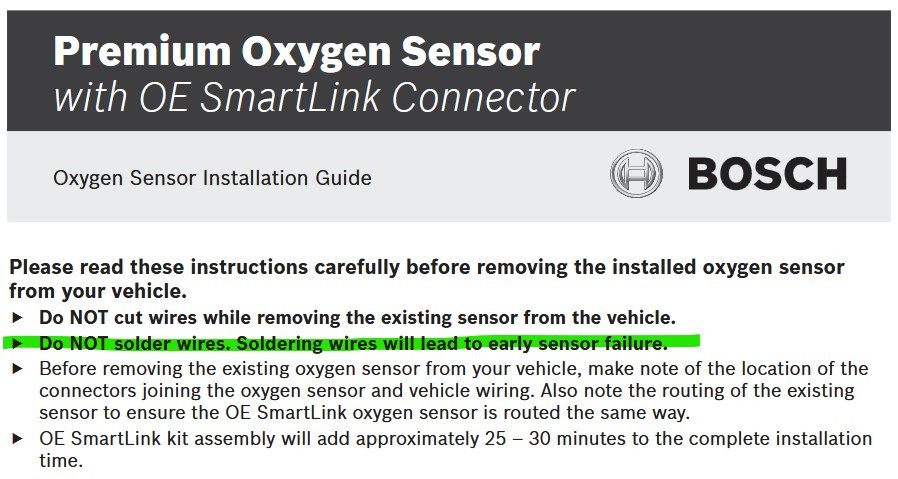
Last edited by 997_986; 07-31-2026 at 02:02 AM.
|
|
|
|
|
07-31-2026, 05:59 AM
|
#13
|
|
Registered User
Join Date: Feb 2005
Location: It's a kind of magic.....
Posts: 6,700
|
Bosch uses microscopic air gaps in some of their O2 sensor wires to pull in the reference air you referred to, so if you cut the sensor wires very short to the sensor itself, soldering might cause an issue. But as the wires that come on the sensors without proper harness connectors are many inches long on purpose, soldering them away from the sensor will not cause an issue as there is still plenty of "breathing" wire still left. Over the years, we have soldered more than a few Bosch sensors that came without a proper harness connector, and we have never had a problem.
I am also aware that some aftermarket sensors use a type of wire that has a high nickel content, and which the manufactures recommend against soldering because it is very difficult to get a good solder connection high nickel wire using commonly used solder unless you use a special type of solder and flux to make the connection.
__________________
“Anything really new is invented only in one’s youth. Later, one becomes more experienced, more famous – and more stupid.” - Albert Einstein
Last edited by JFP in PA; 07-31-2026 at 06:16 AM.
|
|
|
|
 Posting Rules
|
You may not post new threads
You may not post replies
You may not post attachments
You may not edit your posts
HTML code is On
|
|
|
All times are GMT -8. The time now is 04:38 AM.
| |




 Boxster
 Linear Mode


