 05-05-2025, 10:35 AM
|
#561
|
|
Registered User
Join Date: Apr 2023
Location: Oregon
Posts: 545
|
Thanks, Grant. This is an esoteric process and difficult to describe clearly. By "cam tool," I was referring to the tool on the right, which fits into the ends of the cams without locking their rotation but prevents them from falling out. By "cam retainer," I meant the tool on the left, which also keeps the cams from falling out. The lighter-color links are seven links apart and were paired with the divots on the sprockets. So even if the cams rotated a bit during the process of fitting the chain over the pads, it would only matter if the chain jumped a tooth and a lighter link was no longer lined up with its divot. Also, it's my understanding that, once they're loosely held in place by these tools, the cams can be rotated by hand if necessary to line up the slot.

__________________
2000 986 base
Arctic Silver/black
2.7 liter
5-speed manual
Last edited by LoneWolfGal; 05-05-2025 at 05:34 PM.
|

|

|
|
05-05-2025, 07:58 PM
|
#562
|
|
Registered User
Join Date: Apr 2023
Location: Oregon
Posts: 545
|
I picked up some of this stuff, on JFP's recommendation: "ARP 100-9909 Ultra Torque Assembly Lubricant - 1.69 oz. Fluid Squeeze Tube." $13.99 at Amazon. I will of course use it on the compression tool, but it seems to me most fasteners used in the engine would benefit from it. What about flywheel and pressure plate* bolts? Cam cover and sump cover? Cam caps?
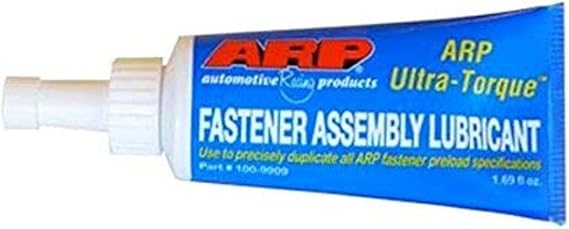
*By the way, I've decided to replace the pressure plate along with the clutch disc and throwout bearing. I had intended to replace only the disc and bearing, but I've come around to the idea that I'd be crazy not to put in a new pressure plate while I'm at it.
__________________
2000 986 base
Arctic Silver/black
2.7 liter
5-speed manual
|
|
|
|
|
05-06-2025, 02:06 AM
|
#563
|
|
Registered User
Join Date: Jan 2019
Location: PA
Posts: 1,726
|
Quote:
Originally Posted by LoneWolfGal

I picked up some of this stuff, on JFP's recommendation: "ARP 100-9909 Ultra Torque Assembly Lubricant - 1.69 oz. Fluid Squeeze Tube." $13.99 at Amazon. I will of course use it on the compression tool, but it seems to me most fasteners used in the engine would benefit from it. What about flywheel and pressure plate* bolts? Cam cover and sump cover? Cam caps?
*By the way, I've decided to replace the pressure plate along with the clutch disc and throwout bearing. I had intended to replace only the disc and bearing, but I've come around to the idea that I'd be crazy not to put in a new pressure plate while I'm at it. |
Definitely not the pressure plate and flywheel bolts. If it's like most other cars, you'll want loctite or some other thread locker for those bolts. Assembly lube would have the opposite effect.
|
|
|
|
|
05-06-2025, 06:14 AM
|
#564
|
|
Registered User
Join Date: Feb 2005
Location: It's a kind of magic.....
Posts: 6,693
|
Quote:
Originally Posted by piper6909
Definitely not the pressure plate and flywheel bolts. If it's like most other cars, you'll want loctite or some other thread locker for those bolts. Assembly lube would have the opposite effect.
|
Almost, but not quite. You definitely want a dot of blue Loctite on the threads of both the pressure plate and flywheel bolts, but a coating of this product underneath the heads of the flywheel bolts makes cranking them to their final +90 degrees after torquing one heck of a lot easier.....
__________________
“Anything really new is invented only in one’s youth. Later, one becomes more experienced, more famous – and more stupid.” - Albert Einstein
Last edited by JFP in PA; 05-06-2025 at 06:17 AM.
|

|
|
|
05-06-2025, 06:31 AM
|
#565
|
|
Registered User
Join Date: Jan 2019
Location: PA
Posts: 1,726
|
Quote:
Originally Posted by JFP in PA
Almost, but not quite. You definitely want a dot of blue Loctite on the threads of both the pressure plate and flywheel bolts, but a coating of this product underneath the heads of the flywheel bolts makes cranking them to their final +90 degrees after torquing one heck of a lot easier.....
|
True, but it seems she was talking about lubing the bolts the same way she would lube the compression tool, given she said she bought the product you suggested to lube the threads of the tool, as you suggested.
Now, putting a dab of assembly lube on the inside head of the bolt where it contacts the flywheel and the pressure plate,is definitely a good idea for proper torqueing. But you certainly do not want that on the threads.
|
|
|
|
|
05-06-2025, 08:04 AM
|
#566
|
|
Registered User
Join Date: Apr 2023
Location: Oregon
Posts: 545
|
Quote:
Originally Posted by JFP in PA
Almost, but not quite. You definitely want a dot of blue Loctite on the threads of both the pressure plate and flywheel bolts, but a coating of this product underneath the heads of the flywheel bolts makes cranking them to their final +90 degrees after torquing one heck of a lot easier.....
|
Makes sense.
Also, you've convinced me that, after sparing no expense on the IMS bearing, I'd be nuts not to cough up a couple hundred more for factory clutch parts. I keep imagining the clutch giving out on some godforsaken stretch of road and wishing I had.
__________________
2000 986 base
Arctic Silver/black
2.7 liter
5-speed manual
|
|
|
|
|
05-06-2025, 08:19 AM
|
#567
|
|
Registered User
Join Date: Feb 2005
Location: It's a kind of magic.....
Posts: 6,693
|
Quote:
Originally Posted by piper6909
True, but it seems she was talking about lubing the bolts the same way she would lube the compression tool, given she said she bought the product you suggested to lube the threads of the tool, as you suggested.
Now, putting a dab of assembly lube on the inside head of the bolt where it contacts the flywheel and the pressure plate,is definitely a good idea for proper torqueing. But you certainly do not want that on the threads.
|
The ARP lube is used on a wide variety of fasteners, like head bolts/studs, crank carrier bolts, etc. to get optimum torque readings and clamping loads. If you go to the ARP website, they have a very interesting "white paper" comparing clamping loads, and actual vs indicated torque readings both with and without the use of fastener lubricants.
__________________
“Anything really new is invented only in one’s youth. Later, one becomes more experienced, more famous – and more stupid.” - Albert Einstein
Last edited by JFP in PA; 05-06-2025 at 08:21 AM.
|
|
|
|
|
05-06-2025, 08:28 AM
|
#568
|
|
Registered User
Join Date: Feb 2005
Location: It's a kind of magic.....
Posts: 6,693
|
Quote:
Originally Posted by LoneWolfGal
Makes sense.
Also, you've convinced me that, after sparing no expense on the IMS bearing, I'd be nuts not to cough up a couple hundred more for factory clutch parts. I keep imagining the clutch giving out on some godforsaken stretch of road and wishing I had.
|
I always encourage people to never "cheap out" on projects like this as the labor involved in going back in to undo the corner cutting is worth more than you actually saved in the first place. And to those who would respond, "I'll be doing it myself so there is no labor cost....", yes, there is is what acountants would call "opportunity costs", the value of what you would be doing otherwise if you weren't back under the car again. Do it right, do it once......
__________________
“Anything really new is invented only in one’s youth. Later, one becomes more experienced, more famous – and more stupid.” - Albert Einstein
|
|
|
|
|
05-06-2025, 08:37 AM
|
#569
|
|
Registered User
Join Date: Jan 2019
Location: PA
Posts: 1,726
|
Quote:
Originally Posted by JFP in PA
The ARP lube is used on a wide variety of fasteners, like head bolts/studs, crank carrier bolts, etc. to get optimum torque readings and clamping loads. If you go to the ARP website, they have a very interesting "white paper" comparing clamping loads, and actual vs indicated torque readings both with and without the use of fastener lubricants.
|
When the Porsche engineers specified a certain torque, was that with or without ARP lube? If ARP makes such a big difference, will you get the actual clamping force the engineers intended or, since ARP makes it easier, more clamping force than intended? Just a thought.
Yes, you want a little Lube on the bolts so they don't bind and "creak" when you torque them down, because if they do you won't get the true torque and less clamping force than intended. Would using ARP have the opposite?
I noticed that the label says it's "specifically designed for ARP fastener preload specs."
Last edited by piper6909; 05-06-2025 at 08:48 AM.
|
|
|
|
|
05-06-2025, 09:22 AM
|
#570
|
|
Registered User
Join Date: Feb 2005
Location: It's a kind of magic.....
Posts: 6,693
|
Quote:
Originally Posted by piper6909
When the Porsche engineers specified a certain torque, was that with or without ARP lube? If ARP makes such a big difference, will you get the actual clamping force the engineers intended or, since ARP makes it easier, more clamping force than intended? Just a thought.
Yes, you want a little Lube on the bolts so they don't bind and "creak" when you torque them down, because if they do you won't get the true torque and less clamping force than intended. Would using ARP have the opposite?
I noticed that the label says it's "specifically designed for ARP fastener preload specs."
|
That has been an internet argument for years. Running my own business, as well as building race cars and engines for various racing venues over several decades, I am super critical about two things when it comes to torque specs: accuracy and reproducability. From everything I have read, and what I have learned myself, sometimes at considerable expense, a lubricated fastener will both attain the correct clamping force, and that clamping force can be accurately be repeated as necessary. Now that thread lubrication can come in many forms: thread locker, anti seize, or simple lubricant; all will provide some level of lubrication during assembly, and not all will provide the same degree of lubrication, but all provide some level, which is the improtant point. In their white paper, ARP discussed at length about finding both erradic and lower clamping pressure than desired when threads were assembled dry and torqued to a given spec, and higher and vastly more consistent clamping pressure when the treads were lubricated and torqued to the same value.
Yes, I have read, and often laughed at, internet stories about people having their wheels fall off because they use anti seize on the lug threads. Anti seize on the lugs both prevent thread galling over time, and incorrectly torqueing the fasteners. I litterally have no idea how many cars we have running around with anti seize on the wheel lugs, but I can tell you that none ever came back because either the wheel fell off or was damaged by excessive torque. Same can be said about engines we either worked on or built for customers. I can tell you that I have seen brand new and very expensive engine cases that demonstrated unequal drag when simply threading in new bolts or studs with my fingers. This one of many reasons why we always "chase" every threaded opening in an engine case before assembly, and use a small dab of ARP thread lubricant when assembling. Consistency matters.
__________________
“Anything really new is invented only in one’s youth. Later, one becomes more experienced, more famous – and more stupid.” - Albert Einstein
Last edited by JFP in PA; 05-06-2025 at 09:25 AM.
|
|
|
|
|
05-06-2025, 09:24 AM
|
#571
|
|
Registered User
Join Date: Apr 2023
Location: Oregon
Posts: 545
|
Quote:
Originally Posted by piper6909
Definitely not the pressure plate and flywheel bolts. If it's like most other cars, you'll want loctite or some other thread locker for those bolts. Assembly lube would have the opposite effect.
|
Thanks, Al. I've used Loctite on conventional engines' flywheels and pressure plates, but I've learned not to make assumptions when it comes to Porsche's flat six, so I included them in the list. You and others on the forum are an indispensable source of knowledge about this engine. Thanks to your kind assistance, I will definitely have the best 986 in the poorhouse!
__________________
2000 986 base
Arctic Silver/black
2.7 liter
5-speed manual
|
|
|
|
|
05-06-2025, 09:34 AM
|
#572
|
|
Registered User
Join Date: Apr 2023
Location: Oregon
Posts: 545
|
Quote:
Originally Posted by JFP in PA
I always encourage people to never "cheap out" on projects like this as the labor involved in going back in to undo the corner cutting is worth more than you actually saved in the first place. And to those who would respond, "I'll be doing it myself so there is no labor cost....", yes, there is is what acountants would call "opportunity costs", the value of what you would be doing otherwise if you weren't back under the car again. Do it right, do it once......
|
And poorhouse be damned, I say!
__________________
2000 986 base
Arctic Silver/black
2.7 liter
5-speed manual
|
|
|
|
|
05-06-2025, 10:48 AM
|
#573
|
|
Registered User
Join Date: Jan 2019
Location: PA
Posts: 1,726
|
Quote:
Originally Posted by JFP in PA
That has been an internet argument for years. Running my own business, as well as building race cars and engines for various racing venues over several decades, I am super critical about two things when it comes to torque specs: accuracy and reproducability. From everything I have read, and what I have learned myself, sometimes at considerable expense, a lubricated fastener will both attain the correct clamping force, and that clamping force can be accurately be repeated as necessary. Now that thread lubrication can come in many forms: thread locker, anti seize, or simple lubricant; all will provide some level of lubrication during assembly, and not all will provide the same degree of lubrication, but all provide some level, which is the improtant point. In their white paper, ARP discussed at length about finding both erradic and lower clamping pressure than desired when threads were assembled dry and torqued to a given spec, and higher and vastly more consistent clamping pressure when the treads were lubricated and torqued to the same value.
Yes, I have read, and often laughed at, internet stories about people having their wheels fall off because they use anti seize on the lug threads. Anti seize on the lugs both prevent thread galling over time, and incorrectly torqueing the fasteners. I litterally have no idea how many cars we have running around with anti seize on the wheel lugs, but I can tell you that none ever came back because either the wheel fell off or was damaged by excessive torque. Same can be said about engines we either worked on or built for customers. I can tell you that I have seen brand new and very expensive engine cases that demonstrated unequal drag when simply threading in new bolts or studs with my fingers. This one of many reasons why we always "chase" every threaded opening in an engine case before assembly, and use a small dab of ARP thread lubricant when assembling. Consistency matters.
|
This is what I love about forums (forii?) like this where people can share their experiences, albeit some more extensive than others. I can't speak for anti-seize on lug nuts, because I never used it and never will. And I may not have much experience on porsches, but I have some experience on Subarus. And on the only two occasions where I used assembly Lube on head bolt threads I had to redo each of them within a year. One was a personal vehicle and the other one was a friend's vehicle, and both times the head bolts came off extremely easily. Was it a coincidence? I don't think so. They either came loose or I over torqued them beyond their limit. They are torque to yield bolts where you turn them of total of 180° Beyond a specified torque. Whatever happened, I'm never going to use assembly Lube on the threads again. Chase them, of course, if they feel like they're binding, and make sure the threads are clean, but no more assembly Lube for me..
|
|
|
|
|
05-06-2025, 12:39 PM
|
#574
|
|
Registered User
Join Date: Feb 2005
Location: It's a kind of magic.....
Posts: 6,693
|
Quote:
Originally Posted by piper6909
This is what I love about forums (forii?) like this where people can share their experiences, albeit some more extensive than others. I can't speak for anti-seize on lug nuts, because I never used it and never will. And I may not have much experience on porsches, but I have some experience on Subarus. And on the only two occasions where I used assembly Lube on head bolt threads I had to redo each of them within a year. One was a personal vehicle and the other one was a friend's vehicle, and both times the head bolts came off extremely easily. Was it a coincidence? I don't think so. They either came loose or I over torqued them beyond their limit. They are torque to yield bolts where you turn them of total of 180° Beyond a specified torque. Whatever happened, I'm never going to use assembly Lube on the threads again. Chase them, of course, if they feel like they're binding, and make sure the threads are clean, but no more assembly Lube for me..
|
A personal choice...............
There are also several articles that list potential reasons why Subaru head bolts are known to come loose, running from the head gaskets themselves, weak or incorrect bolts that fatigue, to incorrect tightening sequences, and even mention lack of lubrication causing the bolts to bind during installation, leading to lower than expected clamping, not unlike what is described in the ARP white paper.
The problems seems well recognized, if not fully studied.
__________________
“Anything really new is invented only in one’s youth. Later, one becomes more experienced, more famous – and more stupid.” - Albert Einstein
Last edited by JFP in PA; 05-06-2025 at 12:53 PM.
|
|
|
|
|
05-06-2025, 02:40 PM
|
#575
|
|
Registered User
Join Date: Jan 2019
Location: PA
Posts: 1,726
|
Quote:
Originally Posted by JFP in PA
A personal choice...............
There are also several articles that list potential reasons why Subaru head bolts are known to come loose, running from the head gaskets themselves, weak or incorrect bolts that fatigue, to incorrect tightening sequences, and even mention lack of lubrication causing the bolts to bind during installation, leading to lower than expected clamping, not unlike what is described in the ARP white paper.
The problems seems well recognized, if not fully studied.
|
Though it is more than coincidental that the only 2 I used assembly lube on were the only two I did (of about 20 or 25) that failed. And of all the ones I did, I've never seen loose head bolts when I tore them down. (besides those two)
If the bolts creak or bind, I take them all out and clean them again, along with the holes.
If it works for you, lube them. More power to you. I won't. And I sure as hell won't put anti-seize on my lugs.
|
|
|
|
|
05-06-2025, 02:55 PM
|
#576
|
|
Registered User
Join Date: Feb 2005
Location: It's a kind of magic.....
Posts: 6,693
|
Like I said, yours is a personal choice. Interestingly, the factory recommends lubrication for Subaru head bolts..............
__________________
“Anything really new is invented only in one’s youth. Later, one becomes more experienced, more famous – and more stupid.” - Albert Einstein
|
|
|
|
|
05-06-2025, 03:12 PM
|
#577
|
|
Registered User
Join Date: Jan 2019
Location: PA
Posts: 1,726
|
Quote:
Originally Posted by JFP in PA
Like I said, yours is a personal choice. Interestingly, the factory recommends lubrication for Subaru head bolts..............
|
I'd be interested in seeing where they recommend using assembly Lube. Oil maybe, but I've never seen them recommend assembly lube.
And Subaru doesn't use Loctite on their head bolts. Oil would defeat the purpose loctite, which was my point from the beginning.
Also from Loctite's website:
"Grease, dirt, or oil in the assembly can slow curing, leading to a weak bond."
Last edited by piper6909; 05-06-2025 at 03:36 PM.
|
|
|
|
|
05-07-2025, 06:14 AM
|
#578
|
|
Registered User
Join Date: Feb 2005
Location: It's a kind of magic.....
Posts: 6,693
|
Quote:
Originally Posted by piper6909
I'd be interested in seeing where they recommend using assembly Lube. Oil maybe, but I've never seen them recommend assembly lube.
And Subaru doesn't use Loctite on their head bolts. Oil would defeat the purpose loctite, which was my point from the beginning.
Also from Loctite's website:
"Grease, dirt, or oil in the assembly can slow curing, leading to a weak bond."
|
I saw it on ALLDATA.
I have never used Loctite on head bolts or studs, and never used or suggested anyone use both lubricant and Loctite on ANY fasteners; but have used thread sealant (alone) when they penetrate the water jacket.
__________________
“Anything really new is invented only in one’s youth. Later, one becomes more experienced, more famous – and more stupid.” - Albert Einstein
Last edited by JFP in PA; 05-07-2025 at 06:18 AM.
|
|
|
|
|
05-07-2025, 07:33 AM
|
#579
|
|
Registered User
Join Date: Jan 2019
Location: PA
Posts: 1,726
|
Quote:
Originally Posted by JFP in PA
I saw it on ALLDATA.
I have never used Loctite on head bolts or studs, and never used or suggested anyone use both lubricant and Loctite on ANY fasteners; but have used thread sealant (alone) when they penetrate the water jacket.
|
ALLDATA said use assembly Lube on Subaru head bolts? I don't think so. Perhaps you read it wrong. Oil, yes. Assembly Lube? I highly doubt it. If so, then I'd suggest you call them and tell them to update their manuals, because Subaru says to use engine oil.
This whole discussion started when you said I was wrong for telling LoneWolfGal not to use the lube you recommend on flywheel and pressure plate bolts because they need Loctite, and now you're saying you never suggested using both? We'll let the posts speak for themselves.
We both agreed that it's good to use it on the head of the bolt, but the discussion stemmed around the threads and them binding up, which you literally said you put a dab on the threads. Again, go back and read the posts. That is, until now, after I remided you that Loctite said not to use any lubricants.
|
|
|
|
|
05-07-2025, 08:05 AM
|
#580
|
|
Registered User
Join Date: Feb 2005
Location: It's a kind of magic.....
Posts: 6,693
|
Quote:
Originally Posted by piper6909
ALLDATA said use assembly Lube on Subaru head bolts? I don't think so. Perhaps you read it wrong. Oil, yes. Assembly Lube? I highly doubt it. If so, then I'd suggest you call them and tell them to update their manuals, because Subaru says to use engine oil.
This whole discussion started when you said I was wrong for telling LoneWolfGal not to use the lube you recommend on flywheel and pressure plate bolts because they need Loctite, and now you're saying you never suggested using both? We'll let the posts speak for themselves.
We both agreed that it's good to use it on the head of the bolt, but the discussion stemmed around the threads and them binding up, which you literally said you put a dab on the threads. Again, go back and read the posts. That is, until now, after I remided you that Loctite said not to use any lubricants.
|
ALLDATA says "suitable lubricating oil", which is EXACTLY what ARP assembly lube is.
From my post, which you here totally misrepresent, " You definitely want a dot of blue Loctite on the threads of both the pressure plate and flywheel bolts, but a coating of this product underneath the heads of the flywheel bolts makes cranking them to their final +90 degrees after torquing one heck of a lot easier....." Nowhere in this post do I even remotely suggest using mixing or using both on the same surfaces.
"Nam ipsa loquitur" to use a long standing legal maxim...............
__________________
“Anything really new is invented only in one’s youth. Later, one becomes more experienced, more famous – and more stupid.” - Albert Einstein
Last edited by JFP in PA; 05-07-2025 at 08:11 AM.
|
|
|
|
 Posting Rules
|
You may not post new threads
You may not post replies
You may not post attachments
You may not edit your posts
HTML code is On
|
|
|
All times are GMT -8. The time now is 09:49 PM.
| |




 Linear Mode


