 10-26-2014, 12:54 PM
|
#1
|
|
Hawaiian Driver
Join Date: Apr 2014
Location: Maui
Posts: 58
|
Plenum upgrade "Real performance or Hype"?
Having read all the aftermarket claims, is this something worth the time and trouble?
The claims made are great, however I'm skeptical, seems like a miracle in a bottle kinda thing. Any thoughts?
__________________
2005 Boxster S 6 Speed
|

|

|
|
10-26-2014, 01:14 PM
|
#2
|
|
Registered User
Join Date: Feb 2005
Location: It's a kind of magic.....
Posts: 6,661
|
Quote:
Originally Posted by Hawaiian Driver

Having read all the aftermarket claims, is this something worth the time and trouble?
The claims made are great, however I'm skeptical, seems like a miracle in a bottle kinda thing. Any thoughts?
|
Depends upon your perspective. Do they actually add power? The answer is yes, but not very much and only in RPM ranges the engine rarely sees.
__________________
“Anything really new is invented only in one’s youth. Later, one becomes more experienced, more famous – and more stupid.” - Albert Einstein
|

|
|
|
10-26-2014, 01:15 PM
|
#3
|
|
Registered User
Join Date: Sep 2010
Location: UK
Posts: 303
|
There's been threads on the plenum chamber previously.. the upgraded throttle body would probably give better bang for the buck. when considering the cost of say the IPD plenum and a used larger bore throttle body (i think from the 996 though nobody quote me on that)
__________________
986 x2 6sp
2x Range Rover Vogue 4.6
2004 MX5 Sport 6speed Strato Blue (wifelet)
2x Range Rover Classic & CSK
|
|
|
|
|
10-26-2014, 02:16 PM
|
#4
|
|
Registered User
Join Date: Aug 2009
Posts: 1,466
|
I have both the IPD and larger throttle body. It's an expensive mod. I would do it again if I had the need to. The parts alone don't help as much as the claims say. It isn't until you retune the car. Then you feel more improvement.
In short to get the improvement you have to tune and buy the parts.
__________________
2003 Black 986. modified for Advanced level HPDE and open track days.
* 3.6L LN block, 06 heads, Carrillo H rods, IDP with 987 intake, Oil mods, LN IMS. * Spec II Clutch, 3.2L S Spec P-P FW. * D2 shocks, GT3 arms & and links, Spacers front and rear * Weight reduced, No carpet, AC deleted, Remote PS pump, PS pump deleted. Recaro Pole position seats, Brey crouse ext. 5 point harness, NHP sport exhaust
|
|
|
|
|
10-27-2014, 04:37 AM
|
#5
|
|
550 Anniversary
Join Date: Jul 2012
Location: Surrey, UK
Posts: 747
|
__________________
Current: 550 Spyder Anniversary- Carnewal exhaust - 100 cell cats - stainless manifolds - 4" underdrive pulley - poly gearbox mounts - rear lower alu brace - adjustable rear toe links
Sold: 986S - Zenith Blue - 18" Sport Classics - Black Zunsport grilles - Stainless silencer and manifolds - K&N panel - shortshift - M030 suspension - 75mm throttle body - custom 83mm intake - SmartTop - custom remap - MDS underdrive pulley
|
|
|
|
|
10-27-2014, 07:25 AM
|
#6
|
|
Track rat
Join Date: Nov 2006
Location: Southern ID
Posts: 3,701
|
Quote:
Originally Posted by JFP in PA
Depends upon your perspective. Do they actually add power? The answer is yes, but not very much and only in RPM ranges the engine rarely sees.
|
^^^ This.
Opening up the intake might find a few ponies especially above 6k rpm. How much time will you actually spend above 6k rpm? Will it deliver faster lap times or only inflated peak dyno numbers? How much is that worth to you?
__________________
2009 Cayman 2.9L PDK (with a few tweaks)
PCA-GPX Chief Driving Instructor-Ret.
Last edited by Topless; 10-27-2014 at 09:29 PM.
|
|
|
|
|
10-27-2014, 06:09 PM
|
#7
|
|
Engine Surgeon
Join Date: Aug 2008
Location: Cleveland GA USA
Posts: 2,425
|
We use modified IPD arrangements on most Stage II engines. In my experience, until you add 400ccs, a point of compression, some real port work and etc , the gains are minimal.
I have seen stock engines make less power with them, back to back on the dyno.
__________________
Jake Raby/www.flat6innovations.com
IMS Solution/ Faultless Tool Inventor
US Patent 8,992,089 &
US Patent 9,416,697
Developer of The IMS Retrofit Procedure- M96/ M97 Specialist
|
|
|
|
|
10-27-2014, 11:09 PM
|
#8
|
|
Registered User
Join Date: Sep 2013
Location: Montreal, QC. (currently expat to Shanghai)
Posts: 3,249
|
Air air more air!
Just keep an eye your accu weather channel for wind direction and just hit those roads. With the wind in your back your boxster car will feel like having +20 more HP
.... well the 2.5 does anyway lol
I say Hype
__________________
______________________________
'97 Boxster base model 2.5L, Guards Red/Tan leather, with a new but old Alpine am/fm radio.
|
|
|
|
|
10-28-2014, 07:27 AM
|
#9
|
|
Registered User
Join Date: Jan 2014
Location: Albuquerque, NM, USA
Posts: 747
|
It's all hype unless it's ...
Larger valves
Camshaft lifts valves higher and/or longer
Displacement is increased
Forced induction is added
To think a company like Porsche has "strangled" your engine by fitting a drastically inefficient intake and/or exhaust system is patently ridiculous.
Cheap fixes would be great, wouldn't they? But reality is it's pay to play.
__________________
Kent Christensen
Albuquerque
2001 Boxster
2007 GL320 CDI, 2010 CL550
2 BMW motorcycles
|
|
|
|
|
10-28-2014, 07:42 AM
|
#10
|
|
Registered User
Join Date: Dec 2012
Location: FL
Posts: 4,145
|
Quote:
Originally Posted by lkchris
To think a company like Porsche has "strangled" your engine by fitting a drastically inefficient intake and/or exhaust system is patently ridiculous.
|
I think that is exactly what they did, how else can a:
2.7L 986 have 217 HP, ~80 HP per liter
3.2L 986 have 250 HP, ~78 HP per liter
3.4L 996 have 300 HP, ~88 HP per liter
Looking another way, the additional .5 liters between the base and S Boxster yields only 33 additional HP, but the .2 Liter difference between a 996 with a 3.4 and a 3.2 S is 50HP?
I would like to be getting 88 HP per liter in my 3.2 S, that would be 282 HP  I bet I could feel that
Quote:
Originally Posted by lkchris
Cheap fixes would be great, wouldn't they? But reality is it's pay to play.
|
Agreed, they are not cheap, one example is to get the bigger intake (the piece that bolts onto the top of the engine that says "Porsche") in the Boxster you have to drop the engine down a little to clear the engine cover because it is taller on the 996. That's why a 996 engine transplant has to be mounted a little lower. Somebody on here has a really good thread and has done a lot of these mods but I can't think of their user name right now. If you search for threads on throttle bodies you will find him. Everytime I read his threads I get excited... but realistically I know those type of mods are beyond me...
Last edited by steved0x; 10-28-2014 at 07:46 AM.
|
|
|
|
|
10-28-2014, 08:25 AM
|
#11
|
|
550 Anniversary
Join Date: Jul 2012
Location: Surrey, UK
Posts: 747
|
They design and spec the components with an eye to cost but also to meet the design brief of the engine and car package. What's on the car is designed to give the car the power and characteristics they want to market and are perfectly fit for purpose. There is no need to design them any better or more efficient as that is not what was in the spec in the first place.
__________________
Current: 550 Spyder Anniversary- Carnewal exhaust - 100 cell cats - stainless manifolds - 4" underdrive pulley - poly gearbox mounts - rear lower alu brace - adjustable rear toe links
Sold: 986S - Zenith Blue - 18" Sport Classics - Black Zunsport grilles - Stainless silencer and manifolds - K&N panel - shortshift - M030 suspension - 75mm throttle body - custom 83mm intake - SmartTop - custom remap - MDS underdrive pulley
|
|
|
|
|
10-31-2014, 04:13 PM
|
#12
|
|
Registered User
Join Date: Sep 2009
Location: toronto
Posts: 2,668
|
Quote:
Originally Posted by Jake Raby
We use modified IPD arrangements on most Stage II engines. In my experience, until you add 400ccs, a point of compression, some real port work and etc , the gains are minimal.
I have seen stock engines make less power with them, back to back on the dyno.
|
I understand that the IPD arrangement has the potential to direct and accelerate the intake air left and right giving more "authority" to the charge, but I have always been concerned that it would restrict acoustic pulses side to side (perhaps this is not a valid concern). Especially when the resonant flap in the cross tube is shut. One can see that the design has evolved with different types of relief holes through the "divider blade" perhaps to mitigate this very issue.
Just a guess:
The engine is drawing the intake air in and the divider could potentially disrupt side to side (one plenum feeding the other) cylinder filling in certain cases (engine rpm and flow rates).
It would look like this design would be much better suit to forced induction where bank to bank acoustics would be covered off by positive pressure before the divider blade
__________________
986 00S
|
|
|
|
|
10-31-2014, 07:30 PM
|
#13
|
|
Engine Surgeon
Join Date: Aug 2008
Location: Cleveland GA USA
Posts: 2,425
|
No, on an normal aspirated engine the short side radius is always where the greatest air speed and velocity will be found. On the flow bench, the long side can have a pitot tube introduced and you'll find no velocity, or a slight vacuum.
This is why I laugh when I look at the arrangement that some out of work practical Engineer did in his Garage, using a vacuum cleaner blower motor to blow over objects, in an attempt to design a component.
The short side is where the men are separated from the boys, and it doesn't mater what it looks like, all that matters occurs on the flow bench.
__________________
Jake Raby/www.flat6innovations.com
IMS Solution/ Faultless Tool Inventor
US Patent 8,992,089 &
US Patent 9,416,697
Developer of The IMS Retrofit Procedure- M96/ M97 Specialist
|
|
|
|
|
10-31-2014, 08:14 PM
|
#14
|
|
Rennzenn
Join Date: Feb 2005
Location: Virginia
Posts: 1,369
|
This is why I laugh when I look at the arrangement that some out of work practical Engineer did in his Garage, using a vacuum cleaner blower motor to blow over objects, in an attempt to design a component.
Ouch!
I think that is exactly what they did, how else can a:
2.7L 986 have 217 HP, ~80 HP per liter
3.2L 986 have 250 HP, ~78 HP per liter
3.4L 996 have 300 HP, ~88 HP per liter
I agree with this, and there is further evidence from the current 3.4 liter engines: 350HP in a 911, but only 315 in a Boxster S.
__________________
Rennzenn
Jfro@rennzenn.com
|
|
|
|
|
10-31-2014, 08:43 PM
|
#15
|
|
Engine Surgeon
Join Date: Aug 2008
Location: Cleveland GA USA
Posts: 2,425
|
Quote:
Originally Posted by j.fro
This is why I laugh when I look at the arrangement that some out of work practical Engineer did in his Garage, using a vacuum cleaner blower motor to blow over objects, in an attempt to design a component.
Ouch!
I think that is exactly what they did, how else can a:
2.7L 986 have 217 HP, ~80 HP per liter
3.2L 986 have 250 HP, ~78 HP per liter
3.4L 996 have 300 HP, ~88 HP per liter
I agree with this, and there is further evidence from the current 3.4 liter engines: 350HP in a 911, but only 315 in a Boxster S.
|
There's more to it than that... The 986 engine uses the same cams as the 5 chain, 3.4 996, they are even stamped as such right on the cam blanks.
The cylinder head ports and castings are also the same, BUT the 3.2 chambers are 3-4ccs smaller, for the smaller bore size.
4 valve engines respond aggressively to bore size increases, the 3mm difference in bore size between the 3.2 and the 3.4 is HUGE in regard to swept volume, and chamber filling. The entire intake system is different as well, as the 986 intake runners are longer and thinner and extend from the plenum chambers all the way to the cylinder heads without interruption. The 3.4 996 does not do this, at the 70% point it breaks away and changes to a more effective aluminum intake runner that bolts to the head.
The plenum areas are also larger.
We find huge gains with intake manipulation, but thats not meaning bolt on items-
Porsche knew that the engine in the Boxster was in the right place, and the engine needed a handicap to keep the performance differentials between the two cars so the 911 would remain the flagship.
Because of this, we have always been able to increase the percentage of power increase more with the 986 engine more than its 996 counterpart. Its not uncommon for us to produce 100HP more than stock from a 3.2S engine for a totally street able engine, on pump gas, with a red line that can be reduced 500RPM lower than stock.
__________________
Jake Raby/www.flat6innovations.com
IMS Solution/ Faultless Tool Inventor
US Patent 8,992,089 &
US Patent 9,416,697
Developer of The IMS Retrofit Procedure- M96/ M97 Specialist
|
|
|
|
|
10-31-2014, 09:26 PM
|
#16
|
|
Registered User
Join Date: Sep 2009
Location: toronto
Posts: 2,668
|
Quote:
Originally Posted by Jake Raby
No, on an normal aspirated engine the short side radius is always where the greatest air speed and velocity will be found. On the flow bench, the long side can have a pitot tube introduced and you'll find no velocity, or a slight vacuum.
This is why I laugh when I look at the arrangement that some out of work practical Engineer did in his Garage, using a vacuum cleaner blower motor to blow over objects, in an attempt to design a component.
The short side is where the men are separated from the boys, and it doesn't mater what it looks like, all that matters occurs on the flow bench.
|
Yes agreed but I am talking about bank to bank flow pulses over the divider blade where you see relief holes......normally that would be a dead area yes
__________________
986 00S
|
|
|
|
|
11-01-2014, 05:36 AM
|
#17
|
|
Engine Surgeon
Join Date: Aug 2008
Location: Cleveland GA USA
Posts: 2,425
|
Quote:
Originally Posted by jaykay
Yes agreed but I am talking about bank to bank flow pulses over the divider blade where you see relief holes......normally that would be a dead area yes
|
Those holes are for lightening the casting, not performance. A pitot tube in that location will show zero air speed.
__________________
Jake Raby/www.flat6innovations.com
IMS Solution/ Faultless Tool Inventor
US Patent 8,992,089 &
US Patent 9,416,697
Developer of The IMS Retrofit Procedure- M96/ M97 Specialist
|
|
|
|
|
11-01-2014, 11:20 AM
|
#18
|
|
Hawaiian Driver
Join Date: Apr 2014
Location: Maui
Posts: 58
|
Thanks Guys, you've really given me great info. I think I'll just leave that alone. Don't really need more power, just have the itch to tinker with things. This is a mod I can live without. Reward vs effort isn't there
__________________
2005 Boxster S 6 Speed
|
|
|
|
|
09-17-2021, 10:14 AM
|
#19
|
|
Registered User
Join Date: May 2020
Location: Rome
Posts: 2
|
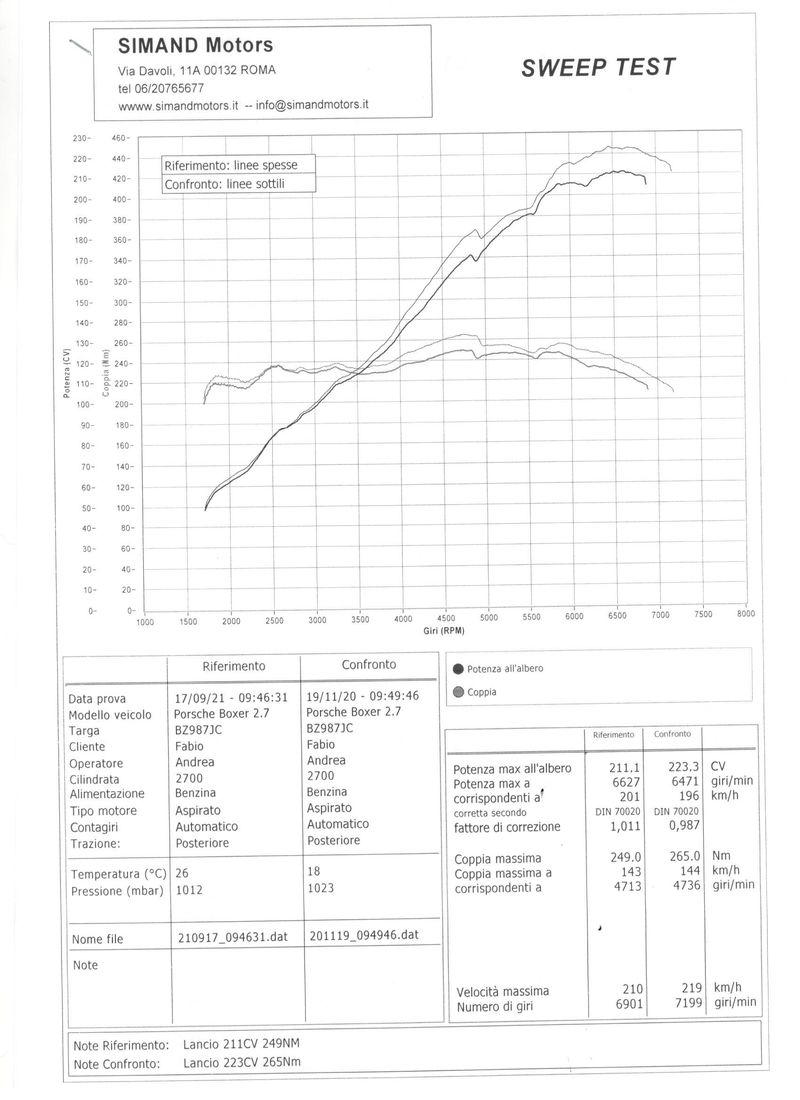
Absolutely waste of time and money.
I did put the 74 too and finally went to test the car.
Lost in every segment and I went from 223cv to 211cv.
|
|
|
|
 Posting Rules
|
You may not post new threads
You may not post replies
You may not post attachments
You may not edit your posts
HTML code is On
|
|
|
All times are GMT -8. The time now is 05:22 PM.
| |




 Boxster
 Range Rover
 928GTS
 928 GTS manual
 928 S4
 928's in a line up

 Porsche Boxster S
 Porsche Boxster
 Lil Red
 2009 Porsche Cayman 2.9L


 986RS
986RS Long term project...
 Fiat 500 Abarth Cabriolet
 Linear Mode


