Hey,
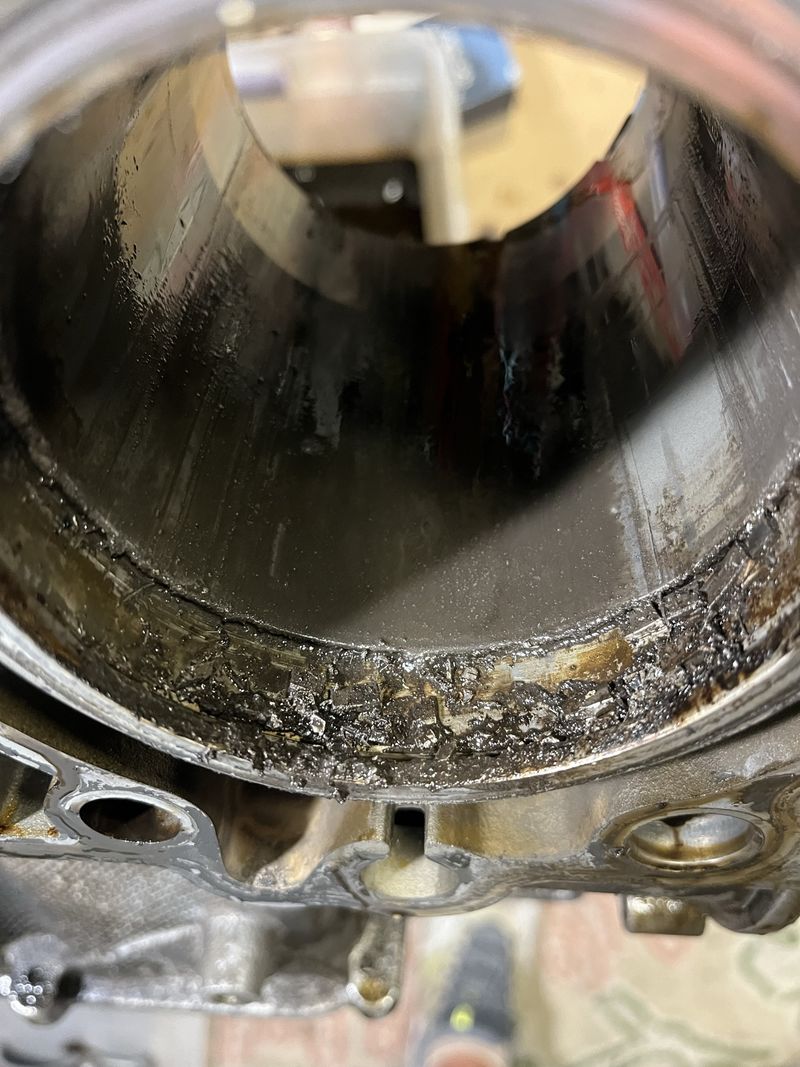
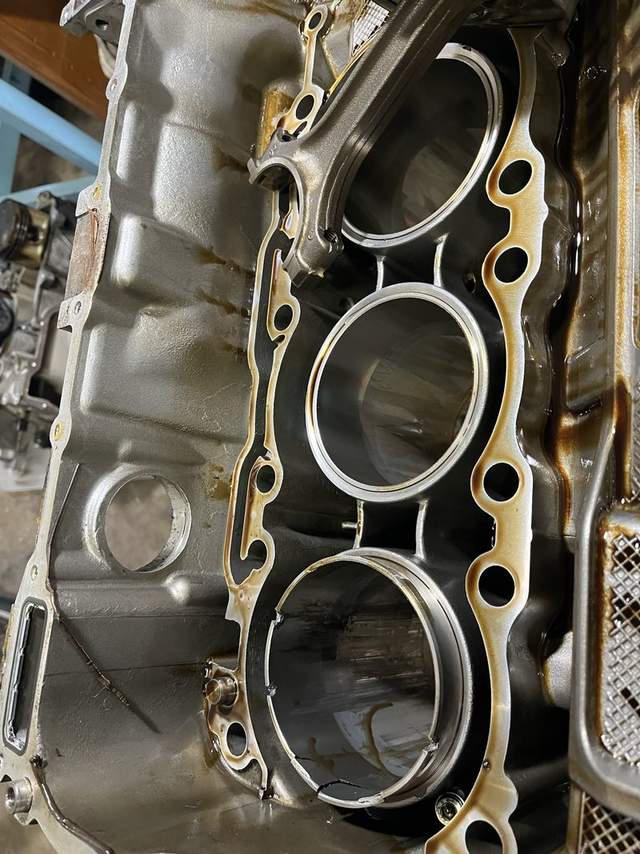
So, I recently acquired this 99 engine for parts and when disassembled I found this:
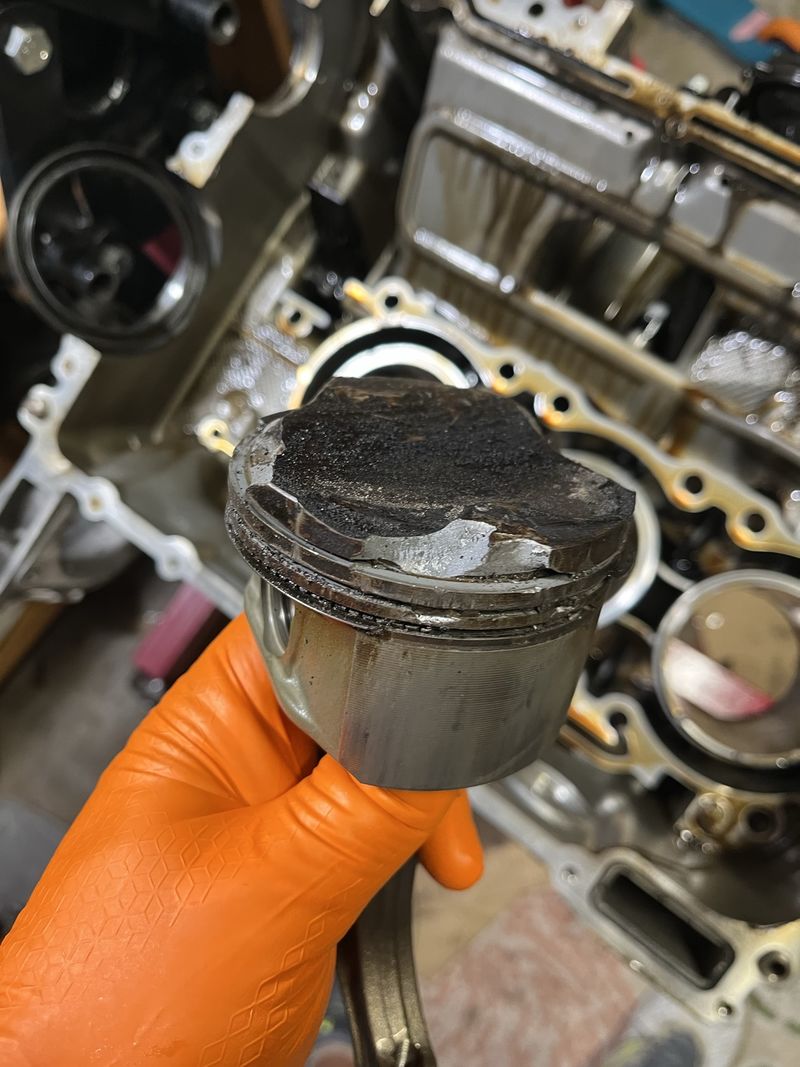
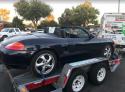
A few shots of the Blue Boxster I rebuilt a few years ago, with the same failure:
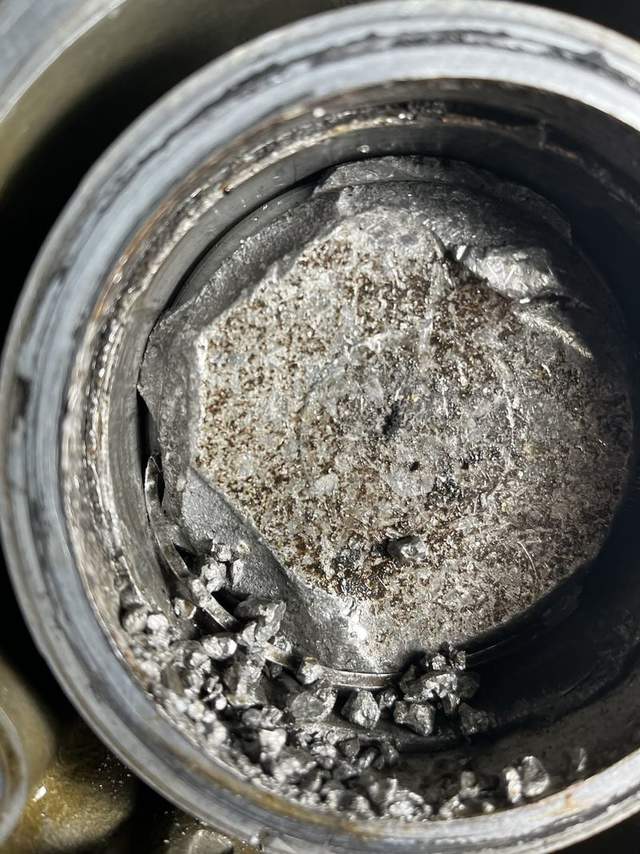
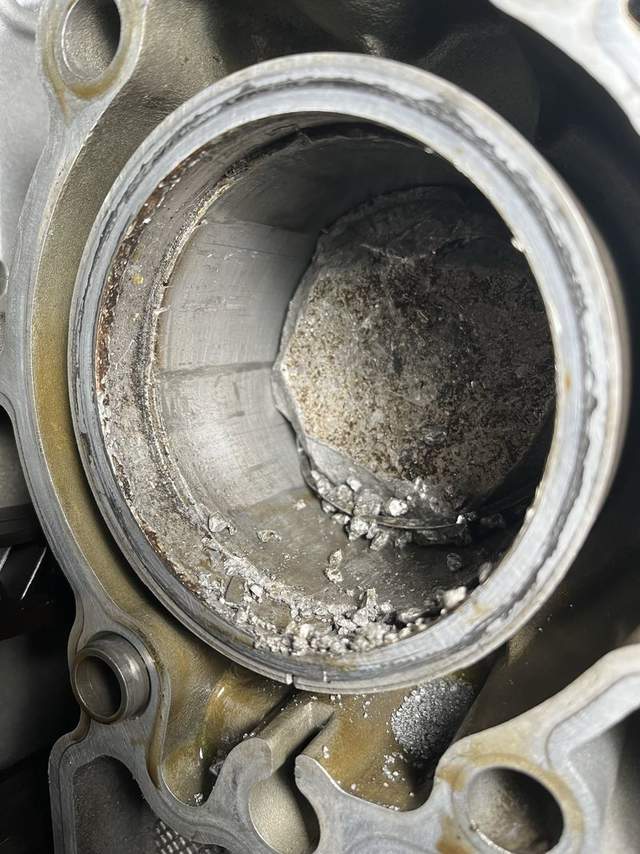
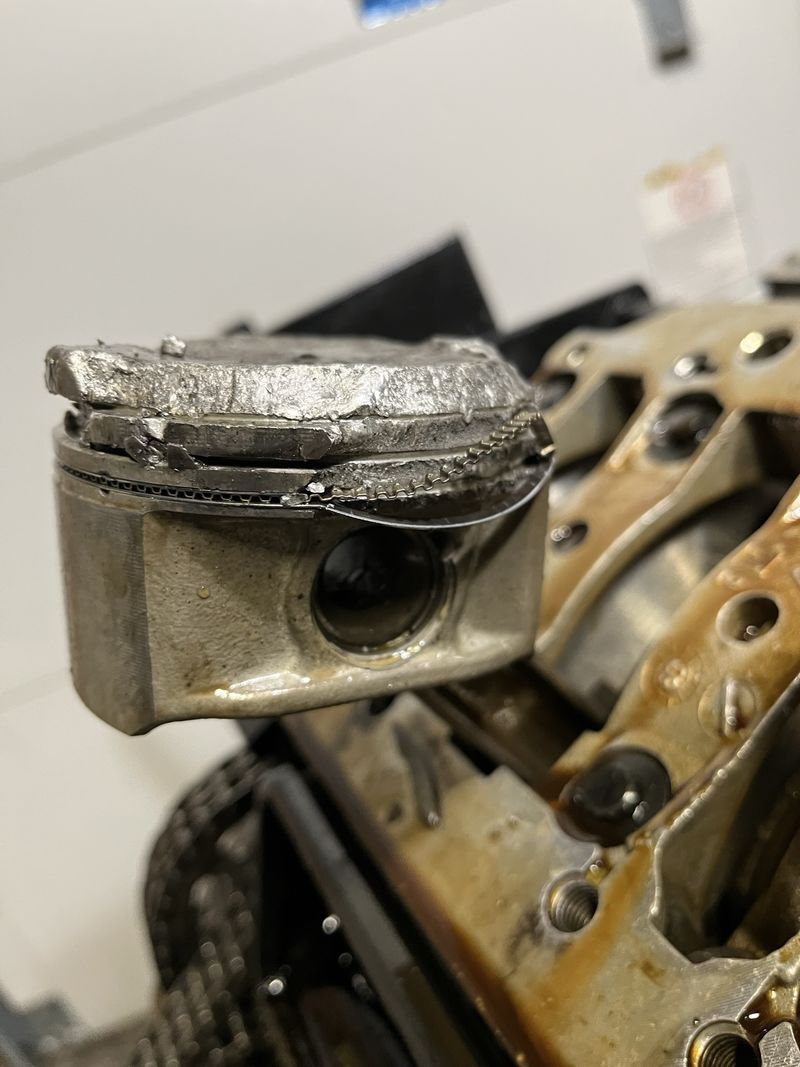
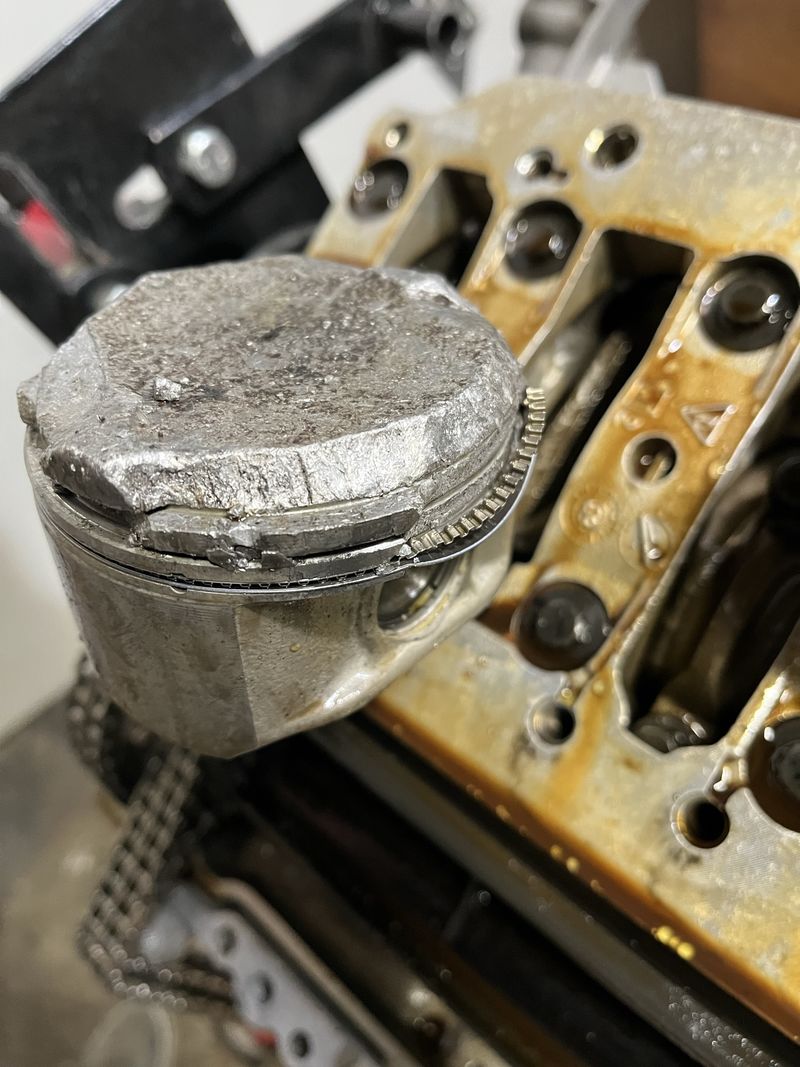
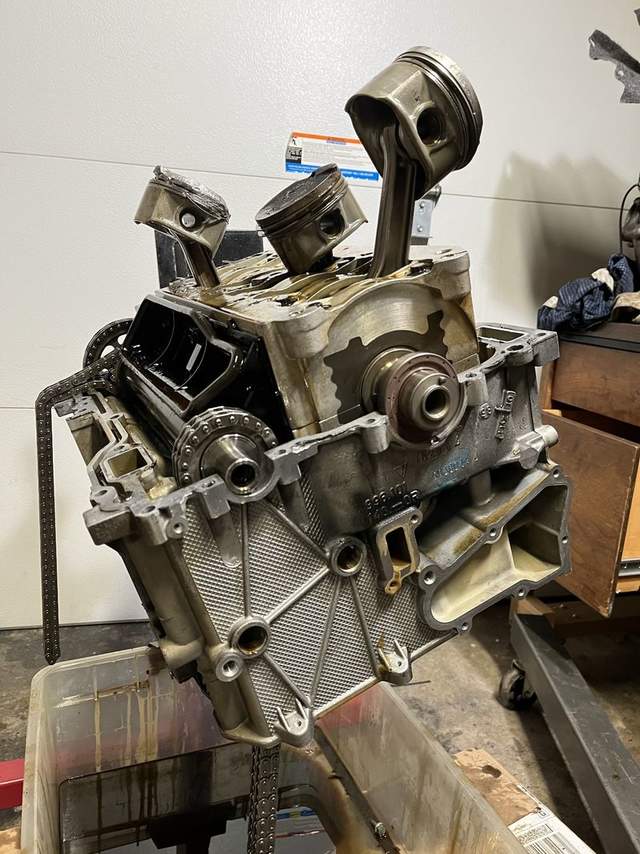
Same exact failure, same year, same bank (#1). What were the chances??

Both engines were factory re-lined (half-) blocks, you can read more about this potential issue with the 99 model year in this write-up below, which is from the PCA website. It's a good read, if you haven't come across this, highly recommended. In a nutshell, when the casting machine in the Porsche factory broke down in the end of 1998, to avoid the slowdown at the production line, Porsche decided to re-use some otherwise faulty engine cases by re-lining them. The rest is history.
Enjoy!
With the introduction of the Boxster, Porsche teamed up with Kolbenschmidt to manufacture their new water-cooled engine. These engines were to utilize the newly introduced Lokasil liners. The liners themselves offer a higher friction-free service area. This is most useful in regard to not only the longevity of the cylinder but the ever-growing higher mileage service interval. The cases experienced several issues starting with their porosity. In 1997 many of these newly released engines seeped oil through the cases themselves. This seepage was due to a problem in the manufacturing process. When the cases are made in a high-pressure die-casting, the air in the die has to escape. Should the alloy enter too fast and not let all the air out, trapped air pockets are the result. These pockets produce a porous area. This area would then allow seepage of the oil. The reason it was generally oil and not coolant leakage was due to the casting process. The air was trapped in the bottom to center rear of the castings, which housed the oil.
Another well-known problem was the liner failures in late 1998 to early 1999. This would translate into only the 1999 model year do to production dates.
These failures were also due to a manufacturing process. The cylinder liners are created from an alloy made abrasion resistant by adding silicon. Prior to casting the crankcase, the cylinder liners are fixed in position by an operator, then surrounded by a conventional aluminum alloy casting. This is done by inserting the pre-formed cylinder liners (manufactured by Plochingen-based Ceram Tec AG in a special freeze casting process) into the die. The dies are then closed and a high-pressure die casting (HPDC) and squeeze casting (SC) are utilized to achieve this. Three casting machines with a closing force of 1800 tons are used for this purpose. The advantage of the Lokasil process is that the silicon is applied only where it is needed. Lokasil base material costs less than Alusil and is easier to process. These liners or pre-forms are of high silicon content (20-27 percent) and offer a high reduction of friction. Kolbenschmidt holds the patent to Lokasil and is also known for their Alusil and Galnikal piston liners. Lokasil is a "sacrificial" bore liner comprised of silicon fibers in a binding that, when inserted into the block mold, burns out the fibers, leaving the high-content silicon surface directly in the bores. This actually allows the “sacrificial” liner to become one with the block thus eliminating a separate part in the block.
In 1998 Kolbenschmidt’s casting machine was damaged. The time required to repair the machine could have slowed Boxster production down severely unless a fix was found. The solution was to reline some not-quite-perfect blocks that were on hand. Most of these blocks had a casting defect or a porosity problem in at least one cylinder. The fix was simple and absolutely acceptable to standards when done correctly. Kolbenschmidt began the process of the repairs until the casting machine was fixed. This process started by boring out the failed cylinder to allow for the insertion of the liner. There is also a groove cut around the top of the cylinder to keep the sleeve from dropping. This groove is approximately 2.0mm larger than the size of the cylinder’s width and goes down approximately 4.5mm. The next step was the insertion of these liners. It was decided to press the liners in the blocks. This is where the error occurred. Some of these liners were pressed in at a higher rate than the top retaining ring could handle. This would then fracture the ring at the top of the liner. When this ring failed under operating conditions, it was catastrophic. The ring itself would fall apart inside the combustion chamber. At this time the piston would force this debris up into the cylinder head. The piston rings would grab the liner and pull it down from the momentum of the crankshaft. Some of these engines were replaced from coolant loss before they totally self destructed in this fashion. This was due to the ring starting to come apart but not fully. This would compromise the sealing of the head gasket and cause the coolant to either be burnt or expelled from the combustion pressure.
Porsche has not divulged exactly how many engines this actually occurred in other than a broad range of 2.5 engines in late 1998-early 1999. Nor have they released any engine numbers that have had sleeves installed. Generally speaking, the problem occurred within the first several thousand miles. They have been very good in correcting this for their customers in and out of warranty.


 Boxster


 Threaded Mode


